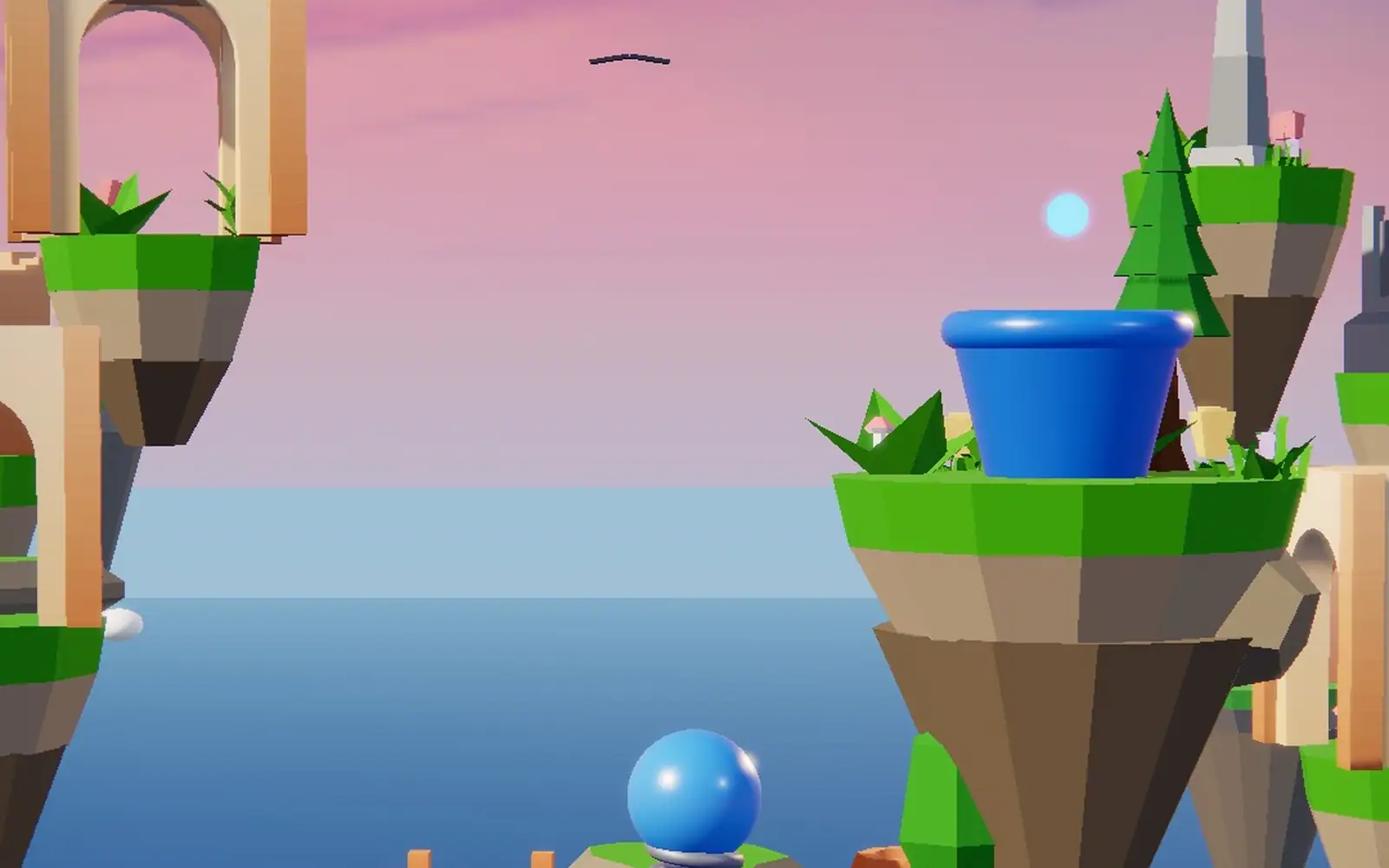
A quick, unboring explanation first: these games are not flat images on a 2D canvas. They are rendered live in three dimensions by WebGL, a technology built into every modern browser that talks directly to your graphics card. No Flash, no plugin, no Unity download, no login. The page loads, and a real 3D world draws itself in front of you.
Here is the tour, roughly in order of how big a world you get dropped into.
Fare City: the biggest world in the arcade
Fare City drops you into a whole low-poly city and hands you a taxi. You can run a fare across town, or ignore the meter entirely and just drive. It is the clearest example of what "real 3D" buys you over a flat game: the streets exist from every angle, so turning the camera shows you something genuinely new instead of the same picture rotated.

Blizzard Peak: 3D used for a real hazard
Blizzard Peak puts the third dimension to work mechanically, not just visually. The avalanche chute running alongside the main slope is a real lane in 3D space you can choose to enter, not a flat overlay. Depth is part of the risk calculation, not just the scenery.
Moto Titans and Trail Blitz: 3D at speed
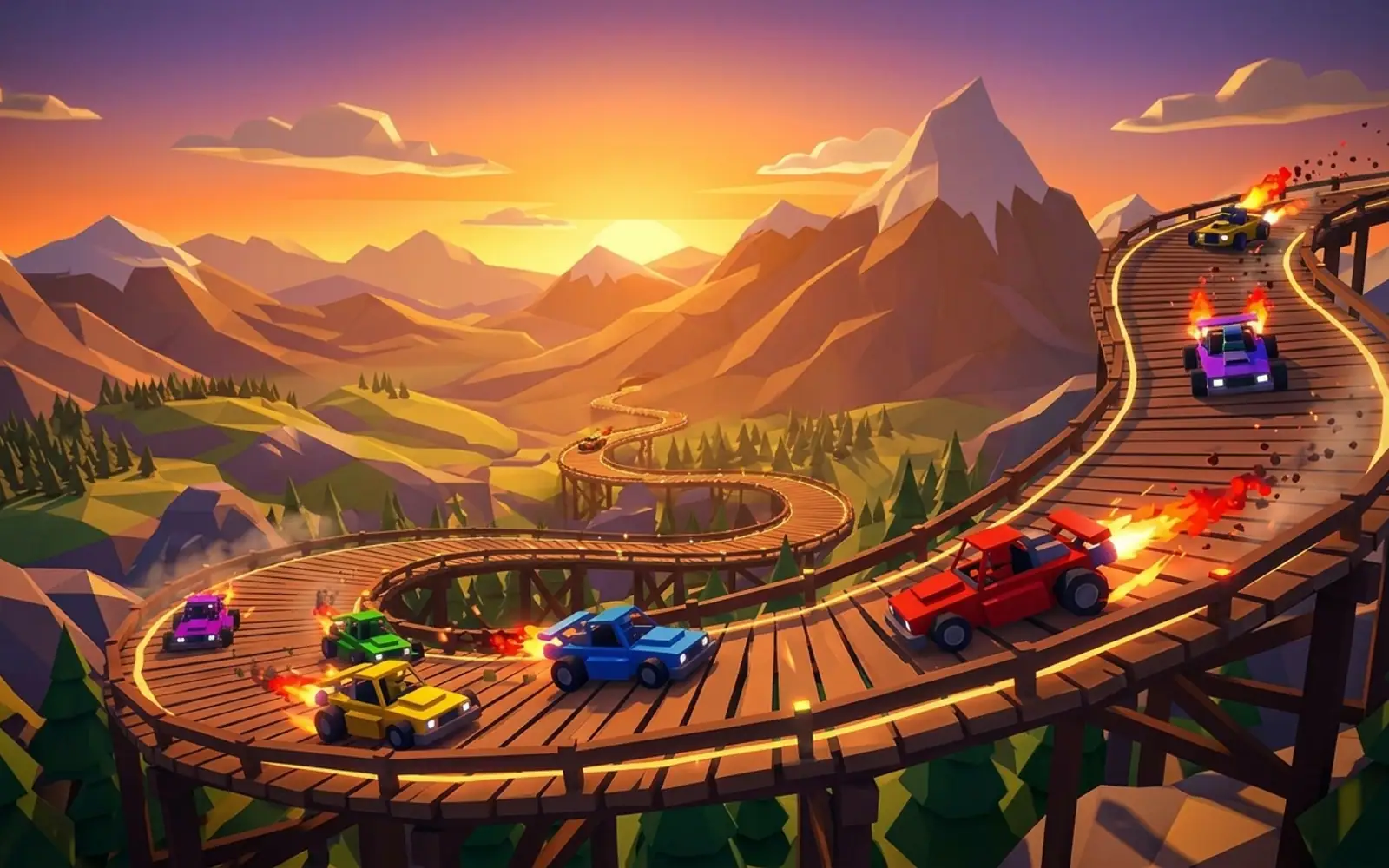
Both racers use their 3D space to sell speed: Moto Titans treats lean as a physics state rather than an animation, so the whole horizon tips with you through a mountain-pass corner, and Trail Blitz's forest circuit uses camera pull-back and motion blur as you accelerate past cruising speed to make the road feel like it is actually rushing at you. We cover both in more depth in our racing games ranking.
Airfoil and Quiet Hours
Airfoil is bush flying, which means the landing is the game and the flight is only the setup. Flaps, rudder and throttle are separate controls and all three matter on approach, because judging height and speed over a short strip is a problem that only exists in three dimensions. Quiet Hours goes the other way and puts you inside the world at eye level, in corridors where the thing hunting you cannot see at all. It listens, and your own footsteps are what give you away.
The full 3D browser games shelf lines them all up side by side if you want to jump between them.